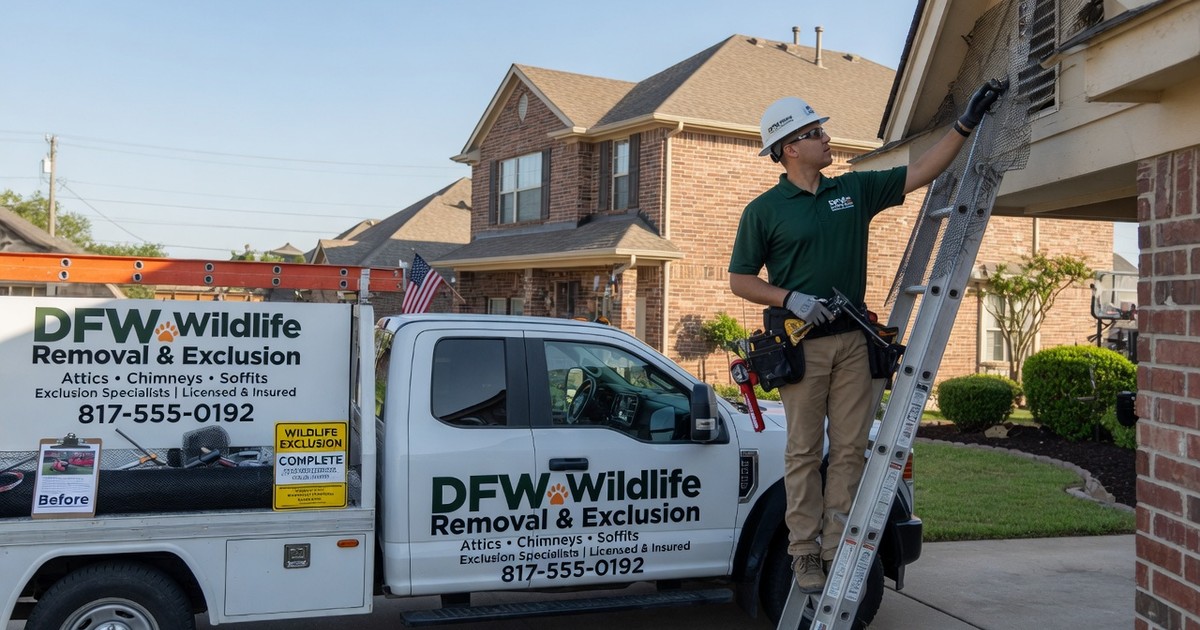
Hearing faint scratching or noticing dark stains near your eaves can signal that bats have begun roosting inside your North Texas home. These protected mammals create health hazards and structural risks when allowed to remain. DFW Wildlife Removal & Exclusion offers precise methods to prevent bats from roosting while respecting all applicable regulations.
Bats frequently select attics and wall voids in Dallas homes, especially in areas like Highland Park and University Park where mature trees provide easy access to rooftops. Their droppings accumulate quickly, causing unsightly stains and strong odors that permeate living spaces. Our specialized bat prevention service identifies primary entry points such as ridge vents, chimney gaps, and loose flashing common to local architecture and then installs one-way exclusion devices that allow safe departure without return.
Because bats are beneficial for insect control yet problematic when roosting indoors, we focus on humane eviction followed by complete sealing. North Texas summer heat makes attics particularly attractive, so timely action prevents colony growth that can reach dozens of individuals. We tailor every step to the specific roosting patterns observed in DFW homes rather than applying generic solutions.
Property owners gain lasting protection when prevention addresses the tiny crevices bats exploit. Our regional knowledge helps anticipate seasonal movements of local bat populations, ensuring exclusion work performed in Deep Ellum or Fort Worth neighborhoods remains effective year after year.
Learn more about how to prevent bats from roosting in house from DFW Wildlife Removal & Exclusion.
Local Bat Roosting Challenges in Dallas-Fort Worth
Homeowners throughout North Texas often first notice bat activity through droppings on porches or hearing high-pitched chirps at dusk. These signs indicate established roosts that can lead to guano buildup and increased insect issues inside walls. The urban forest canopy across the region makes many residential roofs especially vulnerable.
Step-by-Step Bat Prevention for North Texas Homes
Our process begins with an evening inspection to confirm active roost locations and entry points. We then install one-way bat valves that permit bats to exit but not return. After all bats have vacated, we seal every potential opening with materials designed for local climate conditions and perform a final verification.
Frequently Asked Questions
Are bats protected in Texas?
Certain bat species receive legal protection. We follow all state and federal guidelines to ensure humane eviction that complies with North Texas regulations.
When is the best time to prevent bat roosting in Dallas homes?
Late fall through early spring is generally preferred because maternity colonies are not present. We assess each property individually to choose the safest, most effective timing.
Can bats cause damage to a house in the DFW area?
Accumulated guano can corrode wood and insulation. Large colonies also create strong odors and may attract secondary pests.
How do you locate bat entry points on older Dallas homes?
We conduct both interior and exterior inspections focusing on common gaps around chimneys, vents, and rooflines that develop over time in North Texas construction.
Will your bat prevention work affect my home's appearance?
All sealing is designed to blend with existing materials. We prioritize discreet solutions that maintain the visual character of local homes.
Ready to get started?
DFW Wildlife Removal & Exclusion is ready to help.