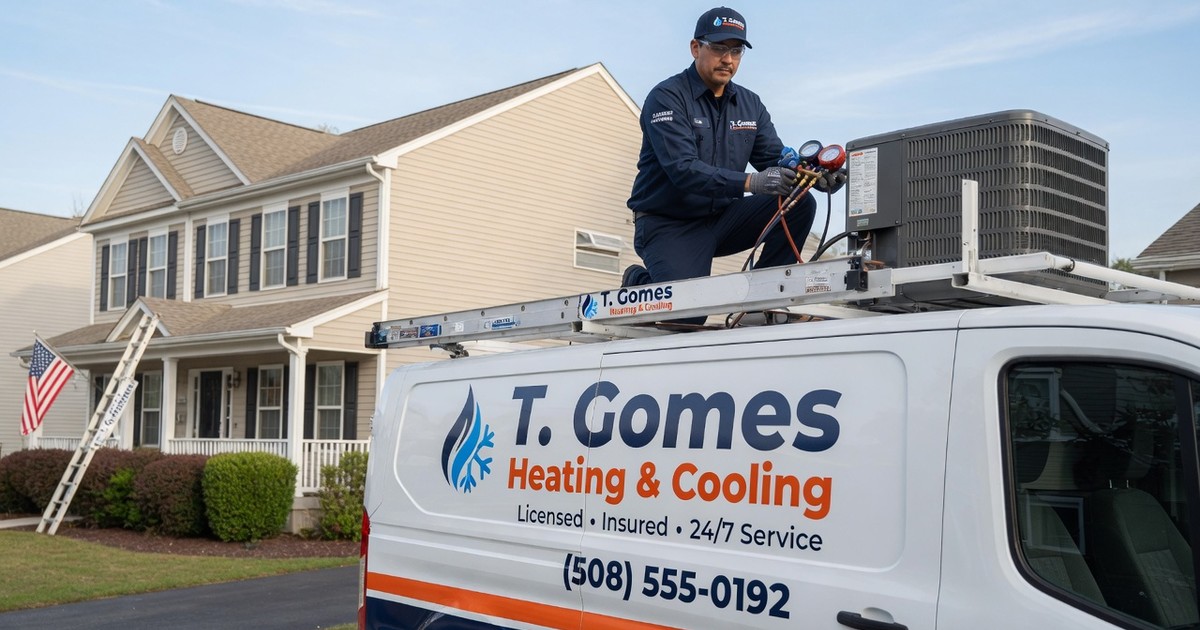
A sudden rattle from the basement or a loud whoosh from the vents can turn a peaceful Warwick night into worry. We trace the sound to its source, explain the mechanical reason behind it, and restore quiet comfort that homeowners haven’t experienced in years.
Heating systems develop noises for specific reasons. Loose panels, worn bearings, expanding ductwork, or failing motors each create their own signature sound. In Warwick homes we commonly find that older furnaces and boilers have settled on floors that transmit vibration more readily. We diagnose the exact cause, show the homeowner the worn part, and perform targeted HVAC repair that eliminates the noise while improving overall efficiency.
Learn more about why is my heating system making noise from T. Gomes Heating & Cooling.
Common Noises Warwick Heating Systems Make and What They Reveal
Banging often signals expanding ducts or air in radiators common in Warwick’s older two-story Colonials. Whistling usually points to restricted airflow caused by dirty filters or collapsed ducts in homes near Buttonwoods. Grinding or squealing indicates motor bearings that have lost lubrication. Each sound tells a story about the system’s health. Ignoring these warnings leads to higher repair costs and uncomfortable cold spots throughout the house.
How T. Gomes Heating & Cooling Approaches Noisy Heating Systems Differently
We treat every noise complaint as a diagnostic opportunity. Founded in 2013, our team specializes in HVAC repair across Warwick. We educate homeowners on exactly why the noise occurs and the long-term consequences of leaving it unaddressed. Our repairs address root causes rather than applying temporary fixes, delivering lasting quiet and reliable heat.
The Step-by-Step Diagnosis and Repair Process We Use for Noisy Systems
We start by listening to the homeowner describe when and where the noise occurs. We then inspect the entire system, measuring vibration, checking belts, bearings, and duct integrity. Once we identify the exact source we explain the failure in plain language. Finally we complete the necessary repairs, test the system under load, and confirm the noise has been eliminated before leaving the home.
Why Local Warwick Conditions Make Heating Noises More Common
Warwick’s freeze-thaw cycles cause ductwork and piping to expand and contract more dramatically than in drier climates. Homes in neighborhoods like Greenwood often sit on slab foundations that transmit motor vibration directly into living spaces. Our familiarity with these local factors lets us pinpoint noise sources faster and apply repairs that hold up under Warwick’s specific weather stresses.
Frequently Asked Questions
Is it dangerous when my heating system starts making loud noises?
Some noises indicate failing components that can lead to carbon monoxide risks or fire hazards. We always check safety systems during diagnosis to ensure the home remains protected while we correct the mechanical issue.
Can dirty air filters cause heating system noises in Warwick homes?
Yes. Restricted airflow forces the blower motor to work harder, creating whistling or straining sounds. Regular maintenance prevents this and improves indoor air quality at the same time.
How can I tell if the noise is coming from the furnace or the ducts?
We isolate the source during our visit. Furnace noises usually occur near the unit itself while duct noises travel and change tone when registers are opened or closed.
Will fixing the noise improve my energy bills?
Almost always. Noisy components often run inefficiently. Repairing or replacing them restores proper operation and lowers heating costs in Warwick’s demanding winters.
Should I turn off my system if it starts making a new noise?
If the noise is accompanied by a burning smell or comes with error codes, turn the system off and call us immediately. Otherwise schedule an inspection so we can diagnose before the problem worsens.
Ready to get started?
Tony and the T. Gomes Heating & Cooling team are standing by.