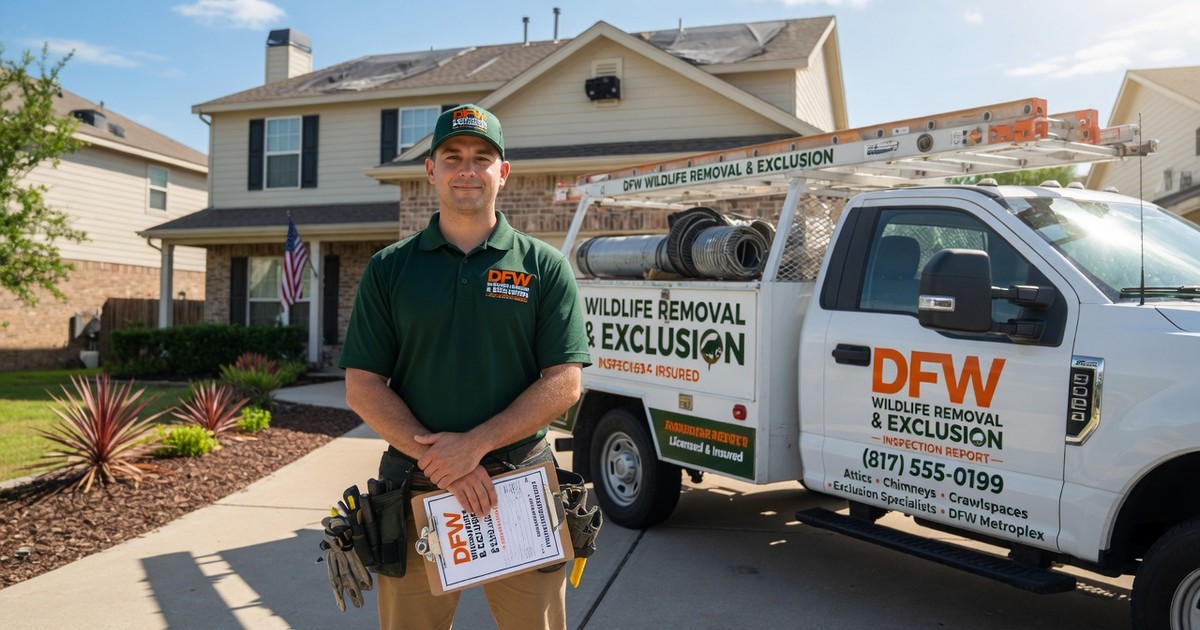
A homeowner hears scratching at dusk and spots small droppings near the eaves. Within days a colony of bats has turned the attic into a roost. Our team at DFW Wildlife Removal & Exclusion steps in, removes the bats safely, and seals every entry point so the cycle stops for good.
Bats enter homes through gaps as small as a quarter inch. Once inside they form maternity colonies that grow quickly. We begin every bat removal job by identifying exactly where the animals roost and how they travel. Our technicians use one-way exclusion devices that let bats exit at night yet prevent re-entry. After the colony leaves we complete full wildlife entry point sealing across soffits, vents, chimneys and rooflines. This exclusion work stops future invasions by squirrels, raccoons, opossums and snakes as well. Homeowners benefit because they learn how to spot early warning signs such as staining below roosts or audible squeaking at dusk. We explain why bats matter to local ecosystems yet cannot share attic space with families. Every step focuses on humane removal followed by thorough sealing that protects the structure from moisture, insulation damage and health risks tied to guano. The same careful process applies to raccoon removal, squirrel removal, snake removal and opossum removal throughout the service territory. By addressing the root cause rather than just the visible animals, we deliver lasting results that homeowners can rely on. The entire workflow educates the customer at each stage so they understand exactly why each seal and each inspection point matters.
Learn more about bat removal dfw from DFW Wildlife Removal & Exclusion.
Warning Signs Homeowners Notice Before Calling for Bat Removal
Common problems include dark stains on exterior walls below entry points, piles of black rice-sized droppings in the attic, and a strong ammonia odor on warm evenings. These signs indicate an active roost that can damage insulation and introduce histoplasmosis spores. Acting quickly prevents the colony from expanding and reduces cleanup costs later.
Why North Texas Conditions Make Bat Exclusion Different
North Texas heat drives bats to seek cool attic spaces while frequent storms loosen fascia boards and create fresh gaps. Local housing stock built with ridge vents and soffit returns offers easy highway access for wildlife. Understanding these specific building features and seasonal patterns lets us seal precisely where bats actually travel instead of guessing.
Frequently Asked Questions
How long does the bat exclusion process usually take?
The full process typically spans one to three weeks. We install one-way doors, monitor nightly activity, then return to remove the devices and complete final sealing once the colony has left.
Do you relocate bats or simply remove them?
We use exclusion methods that allow bats to leave on their own and prevent them from returning. Relocation is rarely effective because bats return to the same roost site if any access remains.
What other animals does your team handle besides bats?
We provide professional squirrel removal, raccoon removal, snake removal and opossum removal using the same exclusion-first approach that protects homes long-term.
Can I seal the holes myself after the bats leave?
DIY sealing often fails because bats find secondary entry points. Professional wildlife entry point sealing ensures every possible gap is closed using materials rated for local weather.
Will bats return after exclusion work is finished?
When every entry point is correctly identified and sealed, bats cannot re-enter. Annual inspections help catch new damage from storms before colonies re-form.
Ready to get started?
DFW Wildlife Removal & Exclusion is ready to help.