A single bat circling the living room at night triggers panic for most families. Knowing exactly what to do if you have bats in house keeps everyone safe and prevents a small problem from becoming a colony. DFW Wildlife Removal & Exclusion walks homeowners through the correct actions from first sighting to final prevention.
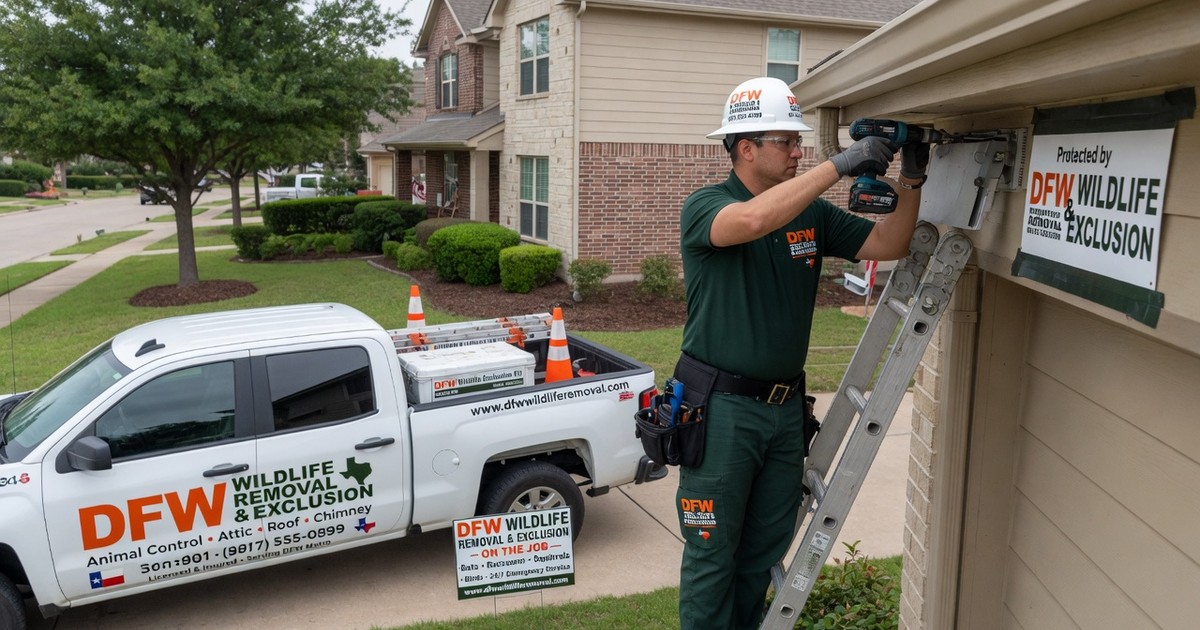
Stay calm and give the bat space to exit through an open window if possible. Never attempt to swat or grab it. Once the immediate threat passes, note the time and location because bats are protected and cannot be handled without proper methods. Our team arrives, conducts a full inspection to find how the bat entered, and explains each discovery. We install one-way exclusion devices that let remaining bats leave naturally while blocking re-entry. After the house is clear we complete detailed wildlife entry point sealing on every potential gap. Customers learn how to inspect their own homes for new openings and why bat guano must be removed professionally to avoid respiratory risks. The same careful education applies when we handle squirrel removal, raccoon removal, snake removal or opossum removal. By focusing on root causes instead of repeated trapping, we turn a frightening encounter into a homeowner who understands prevention.
Learn more about what to do if you have bats in house from DFW Wildlife Removal & Exclusion.
Immediate Risks Homeowners Face With Bats Indoors
Bats can transmit rabies through bites or scratches even though most are not aggressive. Accumulated droppings create dust that carries fungal spores when disturbed. Structural damage occurs when urine soaks insulation and drywall, leading to hidden mold growth.
Seasonal Patterns That Drive Bats Into Local Homes
Summer maternity season pushes bats to find warm, dark places for raising young. Local evening temperatures keep them active later into the night, increasing the chance they slip through small roof or wall gaps. Understanding these timing patterns helps us time exclusion work when mothers and pups can still exit safely.
Frequently Asked Questions
Is it safe to wait and see if the bat leaves on its own?
A single bat may leave if doors and windows stay open, but this does not solve the underlying entry problem. Professional assessment is required to ensure no colony remains inside walls or attic.
Do I need a health department test after finding a bat?
If physical contact occurred, especially during sleep, health officials may recommend testing or preventive treatment. We can advise on next steps but do not provide medical guidance.
How do you locate hidden bat entry points?
We examine the entire exterior for gaps the width of a pencil, use bright lights and smoke pencils to trace air movement, and check for staining or rub marks that reveal travel paths.
Will your bat removal disturb my neighbors?
Our methods are quiet and focused on exclusion rather than loud eviction. We schedule visits to minimize disruption while still completing thorough wildlife entry point sealing.
What other wildlife might use the same holes bats use?
Squirrels, raccoons, snakes and opossums often exploit the same openings. Comprehensive sealing after bat removal prevents multiple species from moving in later.
Ready to get started?
DFW Wildlife Removal & Exclusion is ready to help.