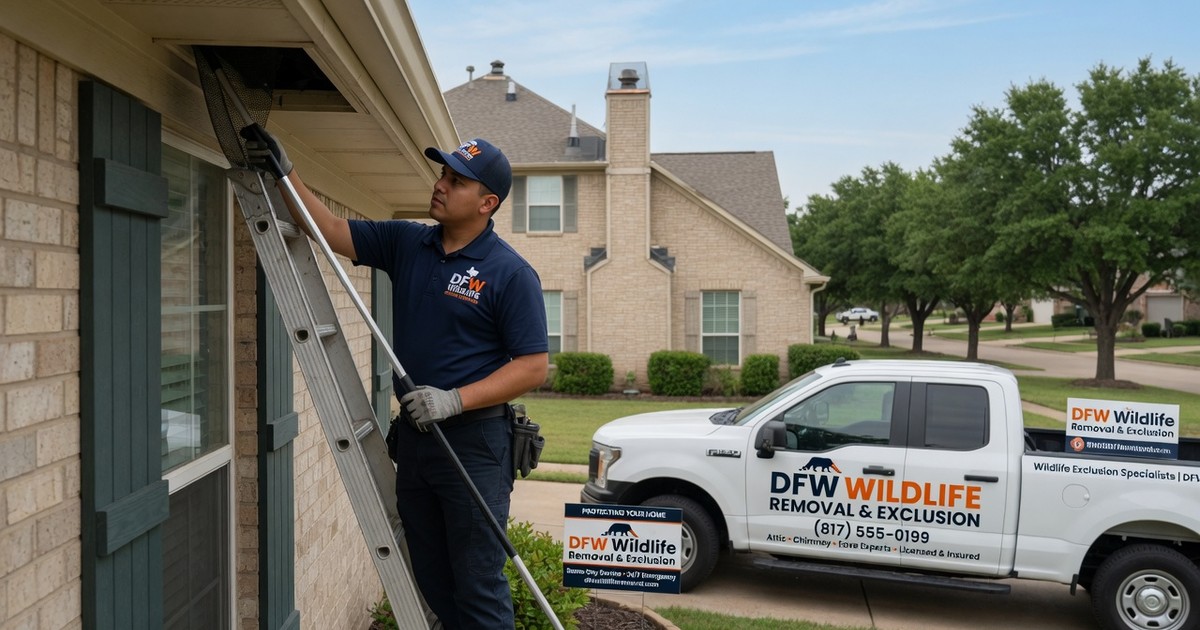
You climb into the attic for holiday decorations and freeze at the sight of torn insulation and scattered debris. These are classic signs of raccoons in attic spaces. DFW Wildlife Removal & Exclusion teaches homeowners exactly what to look for so they can act fast and limit costly repairs.
Raccoons leave unmistakable evidence. Listen for heavy thumping or dragging sounds at night. Look for flattened pathways through insulation, scattered droppings the size of small dog waste, and greasy smudge marks along beams where their fur rubs. These signs matter because raccoons tear apart attic ventilation, chew wiring, and spread parasites. Our experts walk customers through each clue during the inspection so they can spot problems early in the future. After confirming the infestation we perform targeted raccoon removal using safe techniques that avoid harming kits when possible. Once the animals are out we locate every entry point, from loose ridge caps to broken soffits, and complete wildlife entry point sealing that also protects against squirrels, bats, opossums and snakes. Homeowners walk away knowing why attic access points develop in local housing and how seasonal changes push raccoons indoors. This customer-care-education approach turns one stressful discovery into lasting knowledge that keeps homes secure.
Learn more about signs of raccoons in attic from DFW Wildlife Removal & Exclusion.
Local Housing Features That Invite Raccoons Into Attics
Older rooflines common throughout the service area often develop gaps at the fascia and gable vents after repeated temperature swings. Raccoons exploit these precise weaknesses. Knowing the typical construction details of local homes allows us to focus sealing efforts where raccoons actually test for entry rather than applying generic fixes.
What Raccoon Activity Does to Your Attic Over Time
Beyond the noise, raccoons compact insulation until it loses thermal value, leave droppings that attract insects, and create fire hazards by stripping protective coating from electrical wires. Early recognition of signs of raccoons in attic prevents thousands in restoration costs and avoids health risks from roundworm eggs that can remain viable for years.
Frequently Asked Questions
How can I tell raccoon droppings from those of other animals?
Raccoon droppings are tubular, blunt-ended, and often contain visible food remnants like seeds or berries. They are larger than squirrel or bat droppings and usually clustered in one latrine area.
Should I try to remove a raccoon family myself?
Attempting DIY removal risks bites, scratches, and incomplete eviction that leaves babies behind. Professional raccoon removal ensures the entire family is safely moved and entry points are sealed afterward.
What makes raccoons choose my attic over nearby trees?
Attics provide stable temperatures, protection from predators, and easy access to food sources like pet food or unsecured trash. Once they find a suitable entry they return nightly.
Do you also seal the attic after raccoon removal?
Yes. We perform complete wildlife entry point sealing so the same raccoons or other animals cannot return. This step is essential for long-term prevention.
How soon after seeing signs should I call for help?
Contact professionals within 24 to 48 hours of noticing heavy noise or droppings. The longer raccoons remain, the more extensive the damage and cleanup become.
Can raccoons damage the roof structure itself?
They can tear shingles, dislodge flashing, and enlarge holes until water intrusion occurs. Prompt response to signs of raccoons in attic protects both the interior and the roof envelope.
Ready to get started?
DFW Wildlife Removal & Exclusion is ready to help.